
Best Plants for Black Thumbs: Are You Overwatering or Forgetting Your Plant

Some plants die from neglect. Others die from too much love. If your houseplants keep turning yellow, dropping leaves, crisping at the edges, or quietly giving up in the corner, the problem may not be that you have a “black thumb.” It may be that you picked the wrong plant for your care style.
Most struggling plant owners fall into one of two camps.
There is the helicopter plant parent, the one who checks the soil every morning, waters “just a little” every day, and worries whenever a leaf looks different. Then there is the plant ghoster, the one who buys a cute plant, puts it on a shelf, and remembers it exists sometime next month.
The good news is that both types can grow beautiful plants. The trick is matching the plant to the habit.

Start by figuring out how your plants usually die
Before picking a new plant, look at your pattern. Most houseplants do not fail at random. They leave clues.
If leaves turn yellow and mushy, stems soften, soil smells sour, or tiny gnats hover around the pot, you are probably overwatering. The roots may be staying wet for too long, which keeps them from breathing.
If leaves get dry and crispy, stems wrinkle, soil pulls away from the pot, or the whole plant droops dramatically, you are probably underwatering. The plant is using up its stored water faster than you give it more.
Here is a quick way to sort yourself.
If this sounds familiar | You may be |
You water on a strict calendar whether the soil is dry or not | An overwaterer |
You top off the pot with a splash whenever you walk by | An overwaterer |
You worry every droopy leaf means disaster | An overwaterer |
You forget watering day for weeks | An underwaterer |
You only notice the plant when it looks sad | An underwaterer |
You travel, get busy, or lose track of routines | An underwaterer |
Neither type is bad. You just need plants that can handle you.
The best plants for black thumbs are not always the toughest plants. They are the plants that forgive your specific mistake.
If you overwater, choose plants that can tolerate moisture
Overwaterers usually need plants that like evenly moist soil or can bounce back from frequent attention. That does not mean they want to sit in soup. Almost no houseplant loves that. Drainage still matters.
Use pots with drainage holes, empty saucers after watering, and touch the soil before adding more water. If the top inch is still damp, wait.
These plants are better choices for someone who loves a little too hard.
Peace lily
A peace lily is a great pick for the person who wants feedback. When it needs water, it droops in a very dramatic way. After a good drink, it usually perks back up.
Peace lilies like soil that stays lightly moist, so they handle more frequent watering than many low-maintenance plants. They also tolerate medium and lower light, which makes them useful in many homes.
Best for:
People who check their plants often
Homes with medium indirect light
Anyone who wants a plant that shows clear signs
Care tip:
Wait until the top inch of soil feels dry before watering. If leaves look yellow, you may be watering too often or the pot may not drain well.
Spider plant
Spider plants are cheerful, fast-growing, and forgiving. They like regular watering but do not need fussing. Their arching leaves and baby plantlets make them feel rewarding, even for beginners.
They can tolerate a missed watering better than a peace lily, yet they are not as prone to rot as some succulents when cared for by an eager waterer.
Best for:
Bright, indirect light
Hanging baskets or shelves
Beginners who want visible growth
Care tip:
Brown leaf tips can happen from dry air, inconsistent watering, or minerals in tap water. Trim the tips if they bother you, but do not panic.
Boston fern
A Boston fern is not the lowest-care plant on this list, but it suits a very specific type of black thumb: the person who likes to water and mist and check in. Ferns hate drying out completely. If neglect is your problem, skip this one.
If you regularly overwater desert plants, a fern may redirect that energy in a better way.
Best for:
Frequent plant checkers
Bathrooms with bright indirect light
People who enjoy a care routine
Care tip:
Keep the soil evenly moist, not soggy. Give it humidity where you can, and do not place it near heating vents.
Fittonia
Fittonia, also called nerve plant, is small, colorful, and theatrical. When thirsty, it collapses like it has given up on life. Then it often revives after watering.
It likes consistent moisture, which makes it a good option for attentive plant owners. It is also better in a small pot, so it can fit on a shelf, kitchen counter, or plant stand.
Best for:
Small spaces
People who enjoy high-feedback plants
Terrariums or humid corners
Care tip:
Do not place it in harsh direct sun. Bright indirect light keeps the leaf patterns strong without frying the plant.

If you forget to water, pick plants that store water
Underwaterers need plants that do not mind drying out. Many of these plants store water in thick leaves, stems, rhizomes, or roots. They prefer a deeper drink followed by a dry spell.
The biggest mistake with these plants is giving them tiny sips. A splash on top may not reach the roots. Instead, water thoroughly until water runs out of the drainage hole, then let the soil dry before watering again.
These are the plants that can live with your calendar being a little unreliable.
Snake plant
The snake plant is famous for a reason. It has stiff, upright leaves that store water, and it tolerates low light, bright indirect light, and irregular watering.
If you forget it for a few weeks, it will usually be fine. If you water it every other day, it may rot. That makes it a strong match for underwaterers and a risky match for helicopter plant parents.
Best for:
Forgetful waterers
Bedrooms, living rooms, and low-light corners
Anyone who likes a sculptural look
Care tip:
Let the soil dry completely between waterings. When in doubt, wait a few more days.
ZZ plant
The ZZ plant is another classic low-care option. It grows from thick underground rhizomes that hold water, so it does not need frequent attention. Its glossy leaves also hide stress well, which can be nice if you do not want a dramatic plant.
ZZ plants tolerate lower light, though they grow faster in bright indirect light. They are slow and steady, not flashy.
Best for:
Very busy people
Lower-light rooms
Minimal watering routines
Care tip:
Use a well-draining potting mix and avoid oversized pots. Too much extra soil holds moisture longer than the roots need.
Pothos
Pothos sits right in the sweet spot for many beginners. It can handle an occasional missed watering, grows quickly, and trails beautifully from shelves or hanging pots.
It is more flexible than many true drought-tolerant plants. If you forget it until the leaves droop, it often bounces back after a thorough watering.
Best for:
Beginners who want quick growth
Shelves, bookcases, and hanging baskets
Bright to medium indirect light
Care tip:
If vines get long and bare, trim them back. Cuttings can root in water, which makes pothos fun to share or restart.
Jade plant
Jade plants have thick, fleshy leaves and woody stems. They like bright light and infrequent watering. They are a better pick for sunny spots than dark corners.
This is a great plant for someone who wants a small, sturdy plant and will forget it sometimes. It is not ideal for someone who waters daily.
Best for:
Sunny windows
Infrequent waterers
People who like compact plants
Care tip:
Water when the soil is dry. Wrinkled leaves often mean it is thirsty. Yellow, mushy leaves suggest too much water.
Ponytail palm
The ponytail palm is not a true palm, but it looks playful and handles dry conditions well. Its swollen base stores water, which helps it survive neglect.
It prefers bright light and does not need frequent watering. It is also slow-growing indoors, so it will not quickly outgrow its spot.
Best for:
Sunny rooms
People who travel
Anyone who loves quirky plant shapes
Care tip:
Do not bury the bulbous base under soil. Keep it visible above the soil line.

Match your plant to your home, not just your habits
Watering style matters, but light matters just as much. A cactus in a dark hallway will struggle even if you water it perfectly. A fern in a sunny, dry window may crisp no matter how attentive you are.
Think about three things before buying your next plant.
Check the light
Stand where the plant will live and look at the light during the day.
Bright direct light means sunbeams hit the plant for part of the day. This suits jade plants, ponytail palms, and many succulents.
Bright indirect light means the room is bright, but sun does not beat directly on the leaves. This works for pothos, spider plants, peace lilies, and many common houseplants.
Low light means you can read there during the day, but the spot feels dim. Snake plants and ZZ plants tolerate this better than most.
Choose the right pot
A cute pot can cause trouble if it has no drainage hole. Water collects at the bottom, roots sit wet, and the plant declines even if your watering amount seems reasonable.
If you love a decorative pot with no hole, use it as a cover pot. Keep the plant in a plastic nursery pot inside it. Water the plant in a sink, let it drain, then place it back.
Use soil that fits the plant
Moisture-loving plants usually do well in standard indoor potting mix. Dry-loving plants need faster drainage. A cactus or succulent mix can help snake plants, jade plants, and ponytail palms avoid wet roots.
If you overwater, chunky soil is your friend. If you underwater, extremely fast-draining soil may make your plant dry out even faster, so watch how quickly the pot dries.
The easiest plant picks for each type of black thumb
If you want the short version, start here.
Care style | Best starter plants | Avoid for now |
You overwater | Peace lily, spider plant, fittonia, Boston fern | Snake plant, jade plant, most succulents |
You underwater | Snake plant, ZZ plant, pothos, jade plant, ponytail palm | Boston fern, fittonia, calathea |
You are inconsistent | Pothos, spider plant, ZZ plant | Plants with thin delicate leaves |
You have low light | ZZ plant, snake plant, pothos | Cacti, most succulents |
You have bright sun | Jade plant, ponytail palm, succulents | Ferns, many thin-leaf tropical plants |
If someone asked for one plant with the highest chance of success, pothos would be the safest all-around pick. It tolerates a range of light, forgives some watering mistakes, grows quickly, and gives clear visual cues.
If the main problem is chronic neglect, choose a ZZ plant or snake plant.
If the main problem is too much love, choose a peace lily or spider plant.
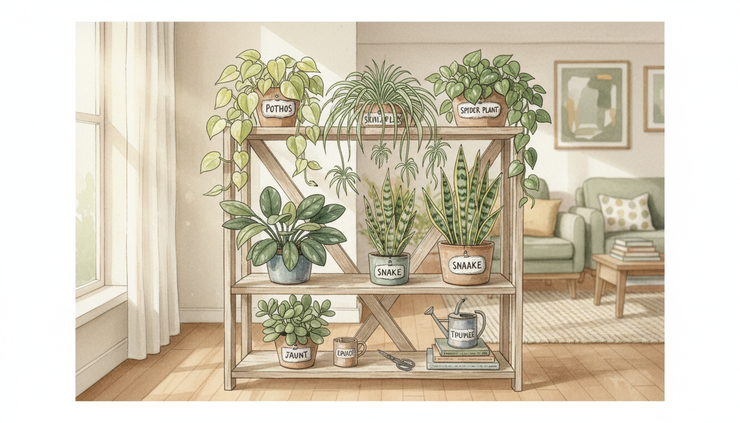
Simple watering rules that save most houseplants
You do not need a complicated system. A few habits will prevent most black-thumb disasters.
Touch the soil before watering
Do not water because it is Saturday. Water because the plant needs it.
Stick a finger into the soil. For moisture-loving plants, water when the top inch feels dry. For drought-tolerant plants, wait until the pot is dry deeper down.
Learn the weight of the pot
Pick up the pot after watering. Then pick it up again a few days later. A dry pot feels much lighter. This trick works better than guessing from the surface, especially with deeper pots.
Water deeply, then stop
Most plants prefer a full watering instead of constant little sips. Water until it runs out the drainage hole, then let the pot drain.
For plants that prefer dry soil, wait longer before doing it again.
Watch leaves, but do not panic
One yellow leaf does not mean failure. Plants shed old leaves. New environments also cause stress. Look for patterns instead of reacting to every single change.
A plant that keeps producing yellow leaves may be overwatered. A plant with repeated crispy drooping may need more consistent watering.
Keep plants where you can see them
The plant you forget is often the one tucked behind a chair or high on a shelf. Put beginner plants in places where they become part of the room. Visibility builds routine.
What to skip until you build confidence
Some plants are beautiful but less forgiving. They are not impossible, but they can make a beginner feel doomed.
Calatheas are known for dramatic leaves and picky moisture needs. Fiddle leaf figs can react strongly to changes in light and watering. Many succulents need more light than indoor rooms provide, and they rot easily when overwatered. Orchids can be easy once you understand them, but they confuse beginners because their care differs from typical leafy plants.
If you love one of these, try it later. Build confidence with a sturdy plant first. Success makes plant care less stressful, and less stress often leads to better care.

Pick a plant that forgives your real life
A black thumb is usually just a mismatch. The plant wanted one rhythm, and life gave it another.
If you are a helicopter plant parent, stop buying plants that want to be ignored. Try a peace lily, spider plant, fittonia, or fern. Your attention will help instead of harm.
If you forget your plants exist, stop buying thirsty divas. Try a snake plant, ZZ plant, pothos, jade plant, or ponytail palm. They can handle quiet stretches without turning crispy overnight.
Start with one plant. Put it in the right light. Use a pot with drainage. Check the soil before watering. That is enough to turn “I kill every plant” into “This one is actually growing.”


Comments